
Autistic Communication Identities
Developmental Insight
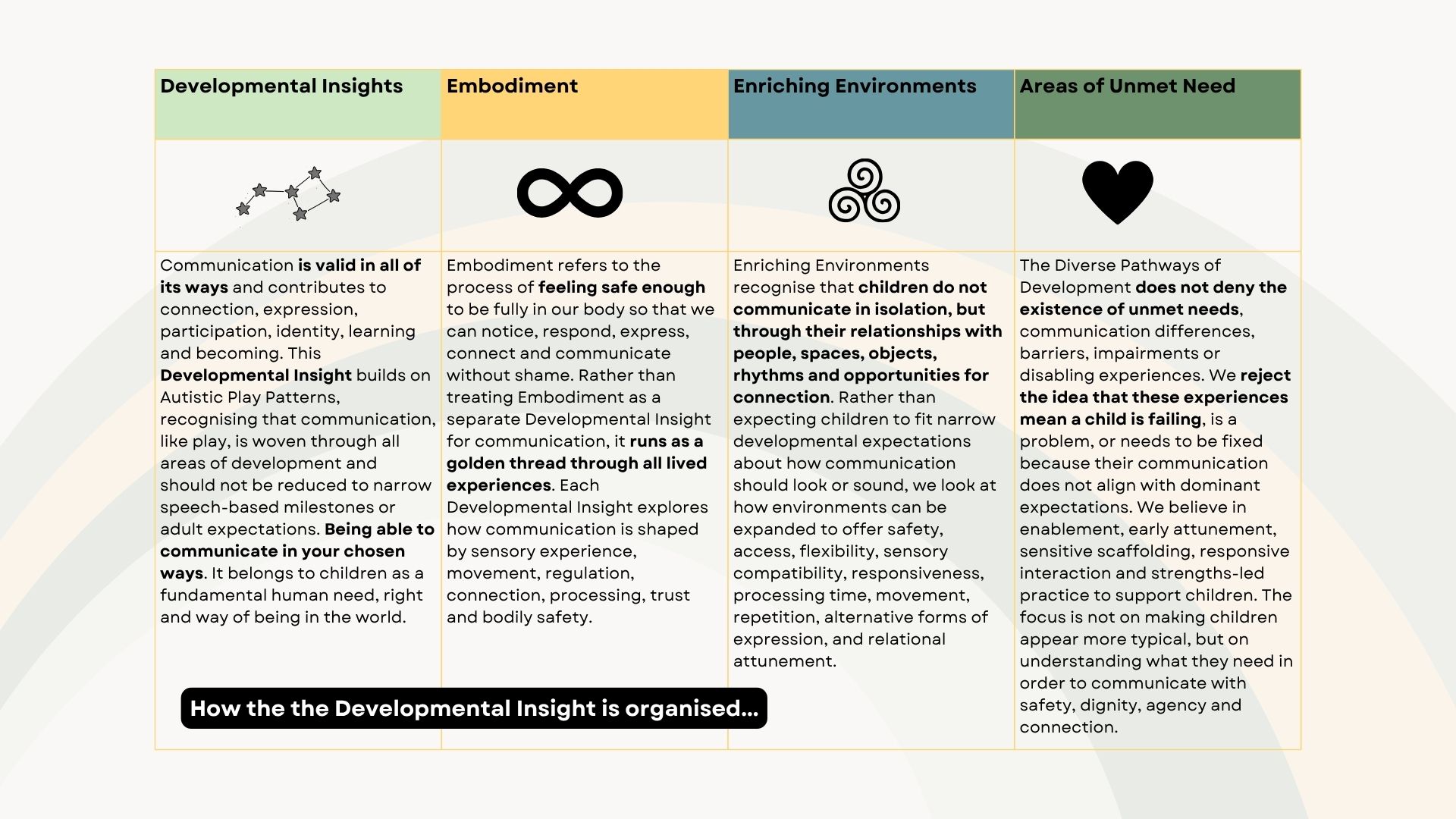
This Developmental Insight explores Communication Identities and is designed to support you in expanding, diversifying, and decolonising understandings of child development and communication.
Much of what is currently known about children’s communication has been shaped by research centred on neurotypical, non-disabled, and often monolingual experiences, which then becomes the standard for what is accepted as “normal” communication. This can create narratives about there being a right, appropriate, or more competent way to communicate. When this happens, some forms of communication become marginalised, misunderstood, or treated as needing to be changed.
Communication should never be used as a measure of a child’s worth, intelligence, or potential, or as evidence that they are failing because their communication does not align with dominant expectations. Communication is rich, meaningful, and relational, and serves many different functions, all of which are explored in this guidance.